
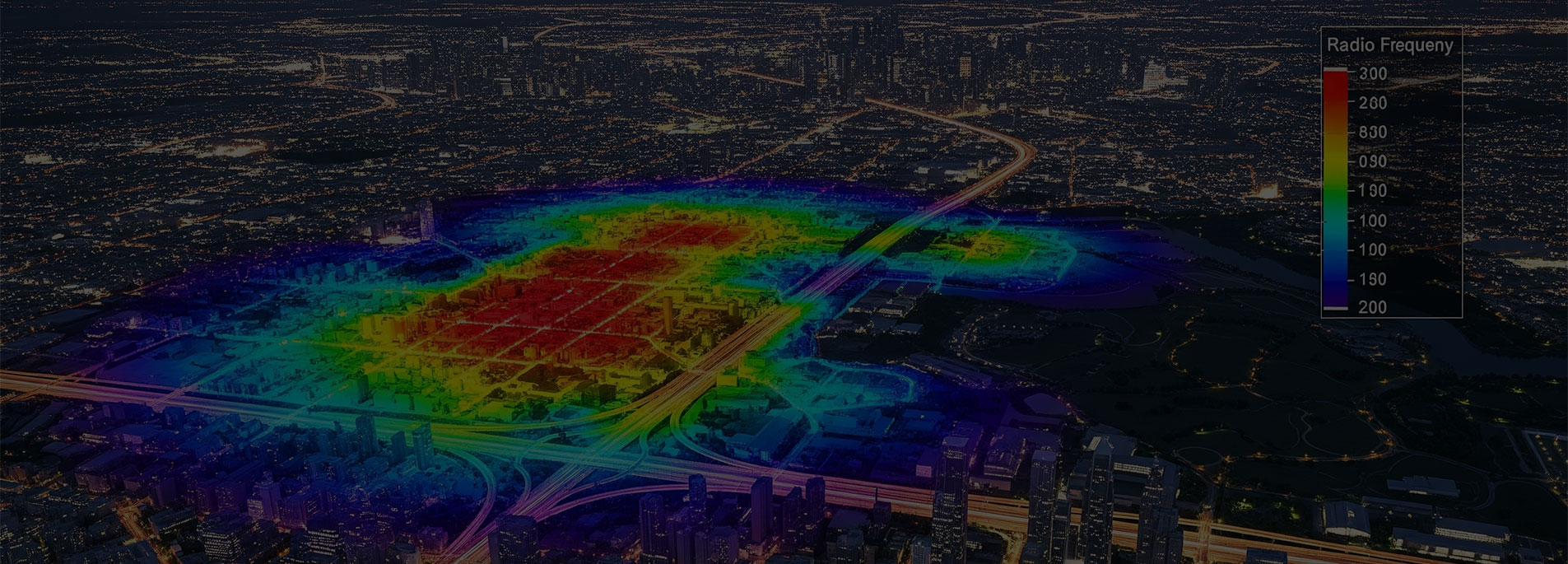
Coverage Study
What is coverage study?
In today’s increasingly connected world, the performance of wireless networks depends heavily on the quality and accuracy of RF (Radio Frequency) study coverage. RF study coverage refers to the process of analyzing and mapping the propagation of radio waves in a given environment to ensure optimal wireless communication. Whether it’s for cellular networks, Wi-Fi deployments, or mission-critical systems like emergency services, comprehensive RF planning is essential for achieving seamless connectivity.
An RF study takes into account various factors such as terrain, building materials, interference sources, antenna types, and signal frequencies. Using advanced modeling tools and site surveys, engineers can simulate signal behavior, identify coverage gaps, and propose solutions such as antenna adjustments, repeater placement, or network redesigns.
Effective RF coverage studies not only enhance network reliability and user experience but also contribute to cost efficiency by minimizing unnecessary infrastructure deployment. Moreover, in regulated industries, ensuring adequate RF coverage is often a compliance requirement.
As organizations adopt more wireless technologies, the importance of RF study coverage continues to grow. Investing in accurate RF planning today lays the groundwork for scalable, high-performance networks that meet the demands of tomorrow.
Indoor RF Coverage Study
An indoor RF coverage study focuses on analyzing wireless signal behavior within enclosed spaces. These environments often present complex challenges due to physical obstructions such as walls, floors, glass, metal, and furniture, all of which can absorb or reflect radio signals. As a result, signal strength can vary significantly from one area to another, leading to dead zones or inconsistent performance.
To address these issues, RF engineers perform on-site surveys using specialized tools that measure signal strength, interference levels, and noise across various locations within the building. These surveys often result in a detailed heatmap, highlighting areas of strong and weak coverage. Modeling software may also be used to simulate signal behavior based on building materials and layouts.
Indoor studies are commonly used in locations such as office buildings, shopping malls, hospitals, warehouses, and stadiums. The main goal is to ensure consistent and high-quality wireless coverage, whether for Wi-Fi, private LTE/5G, or Distributed Antenna Systems (DAS), by optimizing access point or antenna placement.
In Rama Fiber Kish we use iBwave for Indoor RF coverage study planning. See more details here:
IbWAVE iNDOOR cOVERAGE dESIGNOutdoor RF Coverage Study
In contrast, outdoor RF coverage studies are conducted to analyze signal performance across larger geographic areas, such as cities, highways, campuses, or rural regions. Unlike indoor environments, outdoor areas involve more variables—terrain elevation, buildings, vegetation, and even weather can all impact how signals propagate.
Engineers typically use a combination of predictive modeling and real-world testing, such as drive testing, to gather data. Predictive models use terrain maps and antenna parameters to simulate coverage areas before deployment, while drive tests involve collecting actual signal data using vehicles equipped with RF measurement tools. These methods help identify coverage gaps, interference sources, and areas requiring network improvement.
Outdoor studies are especially important for mobile network operators, public safety communications, and large-scale wireless service providers. The insights gained help determine the ideal locations for towers, antennas, and repeaters, ultimately leading to more reliable and efficient wireless networks.
In Rama Fiber Kish we use Radio Planner for Outdoor RF coverage study planning. See more details here:
Radio Planner outdoor cOVERAGE dESIGN