Blog
RF Coverage Study for Indoor Area

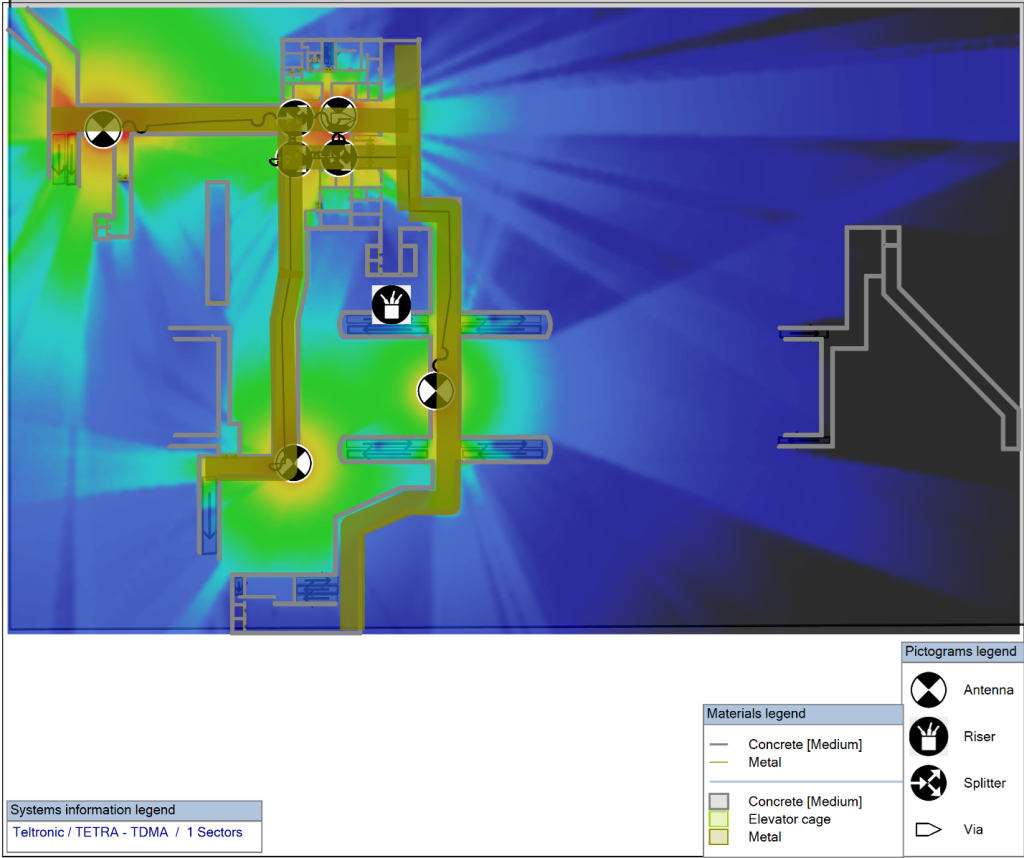
An Indoor RF coverage study ensures that TETRA/PMR systems are designed to maintain a secure, high-availability link between users and control centers, even in the most difficult environments. This supports operational efficiency, enhances situational awareness, and fulfills safety regulations and service-level requirements.
Why to do Indoor RF Coverage Study?
Performing a thorough RF coverage study offers several key advantages:
- Optimal Signal Coverage: Ensures strong and consistent signal throughout the building, reducing dead zones.
- Improved User Experience: Provides better voice and data service quality for users.
- Capacity Planning: Helps predict and support high user density, avoiding network congestion.
- Reduced Interference: Proper design can mitigate co-channel and adjacent channel interference.
- Energy Efficiency: Minimizes the need for high transmission power, saving energy.
- Compliance with Standards: Ensures the network adheres to local regulations and safety standards.
- Cost-Effective Deployment: Helps avoid overbuilding or under-provisioning wireless infrastructure.
iBwave for Indoor RF Coverage Planning
iBwave Design is a leading software solution specifically developed for the planning, designing, and optimization of indoor wireless communication systems. It is widely used across industries where high-reliability RF coverage is required, including public safety, transportation, utilities, and critical infrastructure. In indoor environments—especially complex structures like metro stations, tunnels, airports, hospitals, and multi-story buildings—traditional outdoor RF planning tools fall short. This is where iBwave excels, offering engineers a comprehensive toolkit to design, simulate, and validate the performance of Private Mobile Radio (PMR) and TETRA systems with accuracy and efficiency.

Key Features of iBwave Design
- 3D Modeling of Indoor Environments
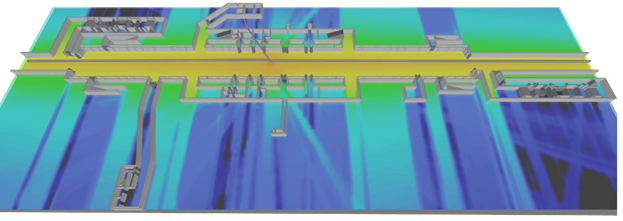
iBwave enables users to create accurate 3D models of buildings, including walls, floors, ceilings, materials, stairwells, and elevators. These structural details allow the software to precisely simulate RF signal behavior, including diffraction, reflection, and absorption—critical for indoor and underground systems.
- Support for TETRA/PMR Technologies
iBwave comes with pre-defined libraries for various technologies including TETRA, DAS (Distributed Antenna Systems), and leaky feeder systems—all commonly used in mission-critical indoor environments.
- Advanced RF Propagation Simulation
Using sophisticated ray-tracing algorithms, iBwave predicts signal strength, interference levels, and coverage boundaries. This helps identify coverage gaps, dead zones, or overlapping interference zones before any physical deployment.
- Automatic Equipment Placement and Cable Routing
The tool can automatically suggest locations for antennas, repeaters, and base stations, and even generate cable routes, saving significant design time.
- Comprehensive Reporting and Documentation
Engineers can easily generate compliance-ready reports, heatmaps, coverage plots, bill of materials (BOM), and detailed design documentation—crucial for procurement, installation teams, and project approvals.
- Integration with Site Surveys and Validation Tools
iBwave works seamlessly with survey tools (e.g., iBwave Mobile or other handheld spectrum analyzers) to compare predicted versus measured signal strengths, enabling iterative improvement of the design.
- Floor plan importing
Building floor plans can be imported quickly from CAD, PDF or JPG files to design wireless networks. Easily assigning materials to walls and surfaces and watch buildings come to life in stunning 3D.
Use Cases in Mission-Critical Environments
- Metro Rail Systems: iBwave is used to model underground tunnels, platforms, and control rooms to ensure that TETRA radios function reliably in all locations, even during emergencies.
- Airports: Public safety and operational communications rely on TETRA systems designed with iBwave, covering terminals, baggage areas, and airside zones.
- Utilities: Power plants and industrial zones benefit from iBwave’s ability to simulate RF behavior in metal-dense environments.
- Emergency Services Facilities: Police and fire command centers use iBwave to ensure uninterrupted communication during crises.